

WordPress 7.0.3 Fixes Pre-Auth XSS — With ThreatShield Protection Already Deployed
Monarx Threat Research Team
On July 18, we talked about WP2Shell, a chain of two WordPress core bugs that turned an anonymous HTTP request into remote code execution on stock installs. ThreatShield's behavioral detection was already live in production before that chain went public.
This week, the pattern repeated: a WordPress core vulnerability, disclosed publicly by WordPress.org earlier today and already covered by our detection layer since before the disclosure went out.
WordPress.org's advisory and the fix are public as of today, in WordPress 7.0.3, released alongside the disclosure. ThreatShield customers have been protected against the known exploitation pattern since before the announcement.
What was disclosed
Pre-authentication XSS on the login page
A crafted login-form submission — no valid credentials required — injects a hidden username value that survives WordPress's tag-stripping and KSES sanitization on the failed-login error message. The injected markup resurrects dormant handlers in WordPress's own login-page scripts: a fake ajaxurl global gets resolved via browser named-property lookup, and the page's password-generator logic auto-triggers a POST to it. The result is attacker-controlled JavaScript execution in the WordPress origin, before any authentication happens.
The vulnerability does not require a plugin and exists in code every WordPress installation ships with. It is fixed in WordPress 7.0.3, available now.
Why the exposure window is the real problem
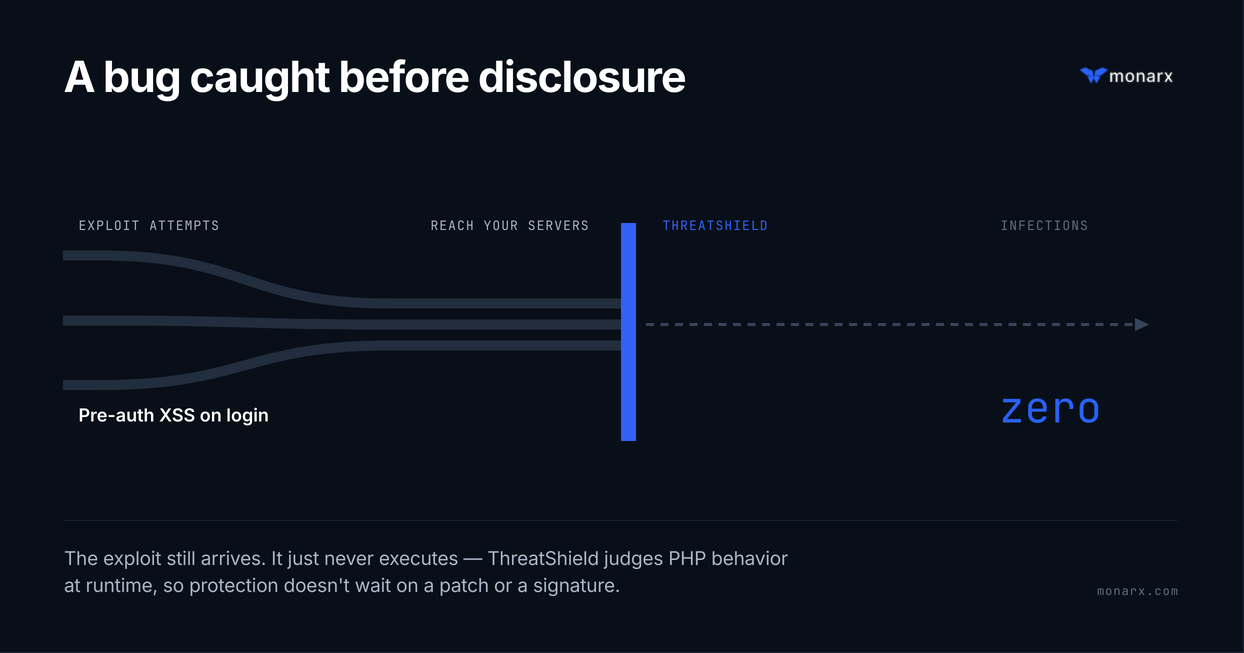
The pattern across WP2Shell, this vulnerability, and nearly every core-level WordPress disclosure this year is the same: the gap between "researcher reports it" and "site owner patches it" is where the damage happens. VulnCheck reported exploitation of WP2Shell within hours of disclosure, with a working proof of concept public on GitHub the same day. Now that today's disclosure and technical write-up are public, expect the same clock to start running on this vulnerability. Publicly disclosed vulnerabilities with clear reproduction steps get weaponized within hours, not days, because AI-assisted tooling has collapsed the time and skill it takes to turn a technical write-up into a working exploit. A vulnerability report that once took a skilled attacker days to operationalize can now be turned into a scanning script in an afternoon by someone with no offensive security background at all.
That reality changes what "patch on your own schedule" actually costs. Forced auto-updates help, but they aren't guaranteed to land everywhere immediately — version-pinned deployments, disabled auto-update settings, and staged rollouts all create sites that stay exposed well past the disclosure clock. A compensating control that's active before the disclosure, not after, is the only thing that closes that gap.
Why ThreatShield succeeds here
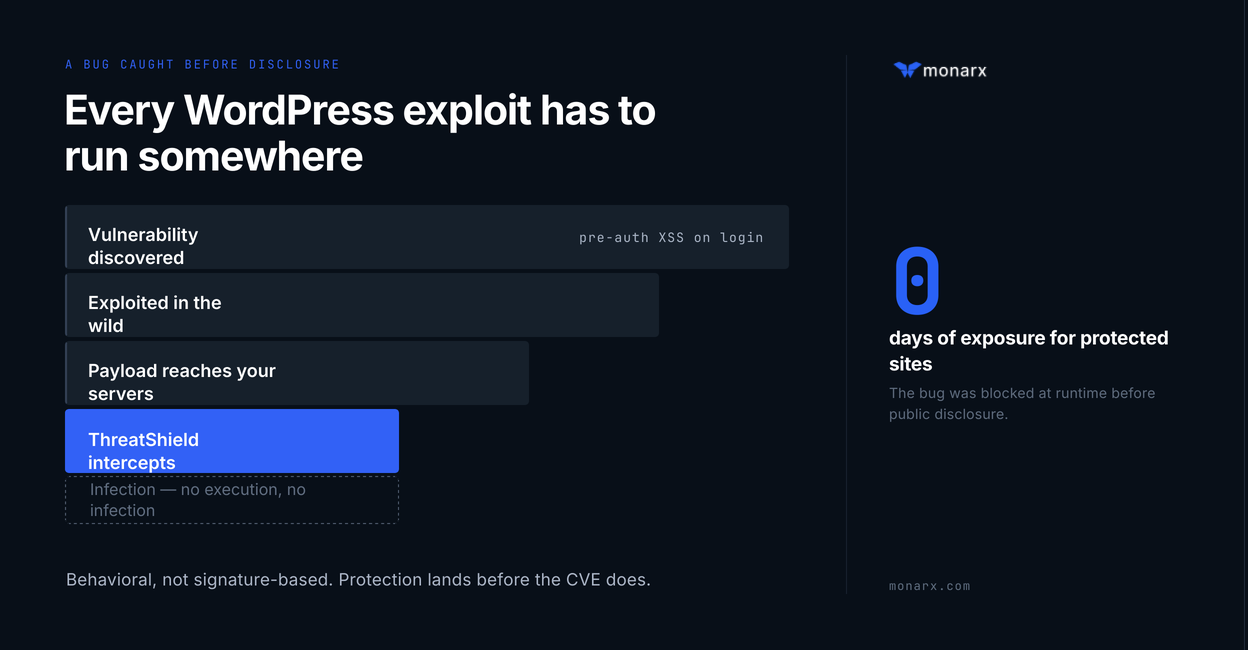
As soon as the WordPress Security Team began coordinating with hosting and security providers, Monarx analyzed the vulnerability and developed ThreatShield protection for its known exploitation path. That protection was deployed before the vulnerability became public, giving customers running ThreatShield in blocking mode protection during the gap between disclosure and patching.
What this means for you
No action was required from Monarx customers during the exposure window — ThreatShield had the known exploitation pattern covered prior to WordPress.org’s disclosure, the same way it covered WP2Shell ahead of its disclosure. Now that the advisory is public and WordPress 7.0.3 is available, we'd still recommend updating on schedule: ThreatShield is a compensating control during the exposure window, not a substitute for the patch, and closing the underlying vulnerability is what removes the exposure for good.

Ready for next‑gen AI Server Security?
Start your Monarx journey in minutes