

The Hack That Started With an Old Password
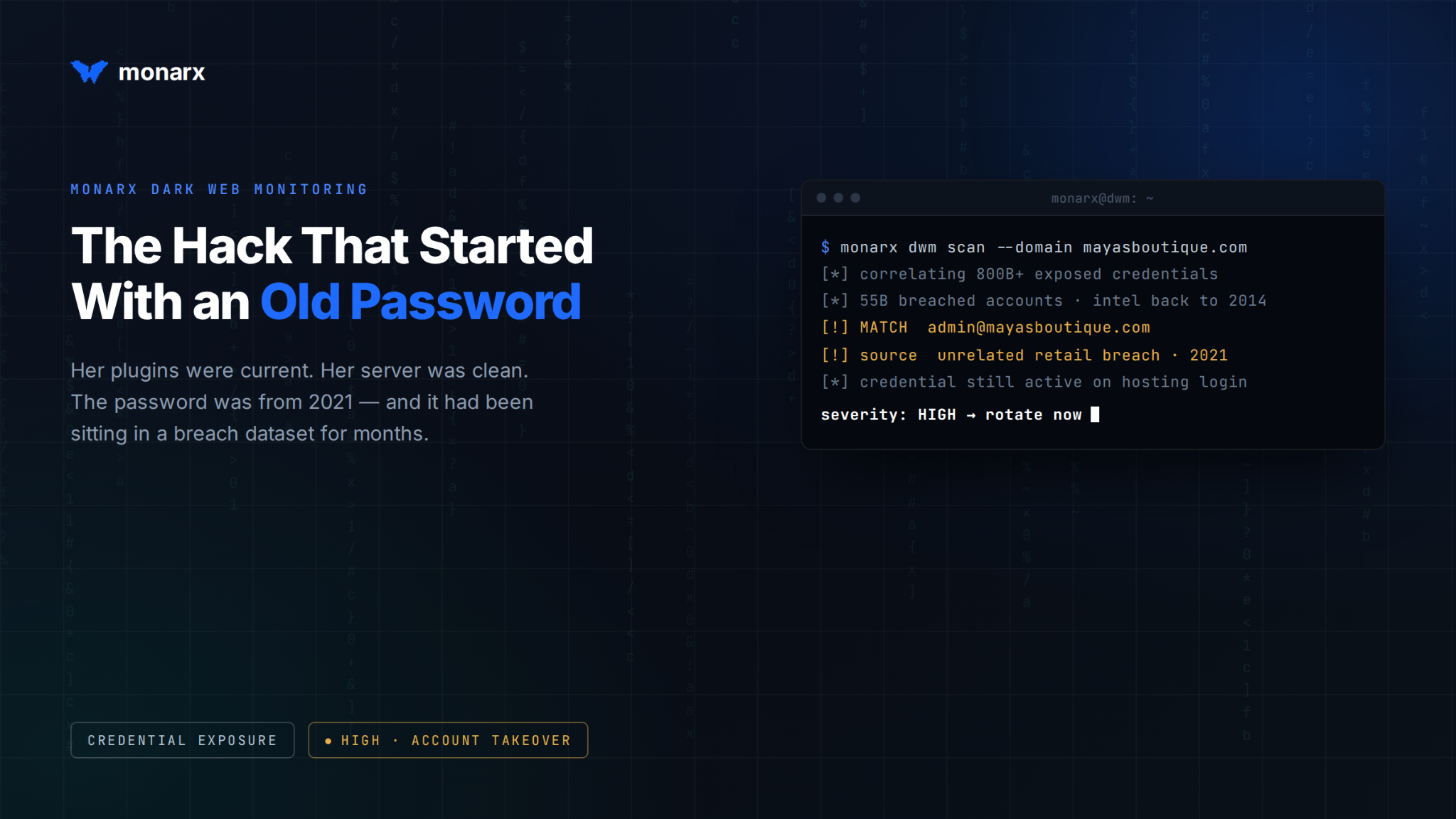
Maya runs a small online boutique. Her hosting account had never been touched by malware, her plugins were up to date, and she'd never clicked a suspicious link. And yet one morning she woke up to a defaced homepage and a support ticket confirming what she didn't want to hear: her site had been compromised.
The investigation didn’t turn up a zero-day exploit or a sophisticated attacker. It turned up a password — the same one Maya had used on her hosting account since 2021, which had also been sitting on her account with a shopping site that got breached the year before. That breach had nothing to do with her host. But the password did.
This is one of the most common — and most preventable — ways hosting customers get hacked. Not through a flaw in your infrastructure, but through a credential that was exposed somewhere else entirely, then quietly reused where it mattered most.
It’s rarely the server. It’s almost always the password.
Security, Malware & Threat Research teams spend a lot of energy hardening servers, patching CMS software, and watching for malware. All of that matters. But a huge share of real-world compromises start somewhere much simpler: a login and password that already exists in a breach dataset, waiting to be tried.
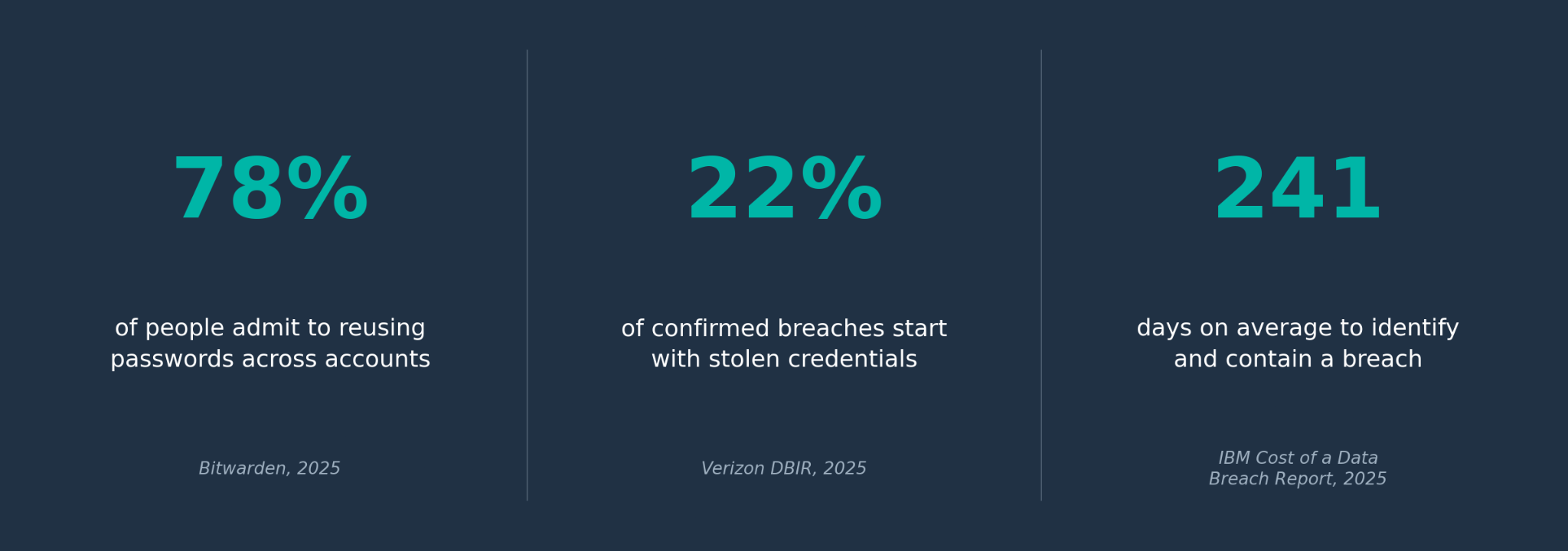
Here’s what the broader research says about how common this really is:
- 78% of people admit to reusing the same password across multiple accounts (Bitwarden, 2025 World Password Day survey).
- Stolen or compromised credentials are the single most common way into a confirmed breach — involved in 22% of all incidents, and in 88% of basic web application attacks (Verizon 2025 Data Breach Investigations Report).
- On average, it takes organizations 241 days to even identify and contain a breach (IBM Cost of a Data Breach Report, 2025) — which means a password can sit exposed for months before anyone notices anything is wrong.
None of this happens because someone made an obviously careless mistake. It happens because reusing a password is normal, human, and something almost everyone has done at least once. That’s exactly why this problem is so widespread and why it’s so solvable once you know where to look.
How an old password turns into a today problem
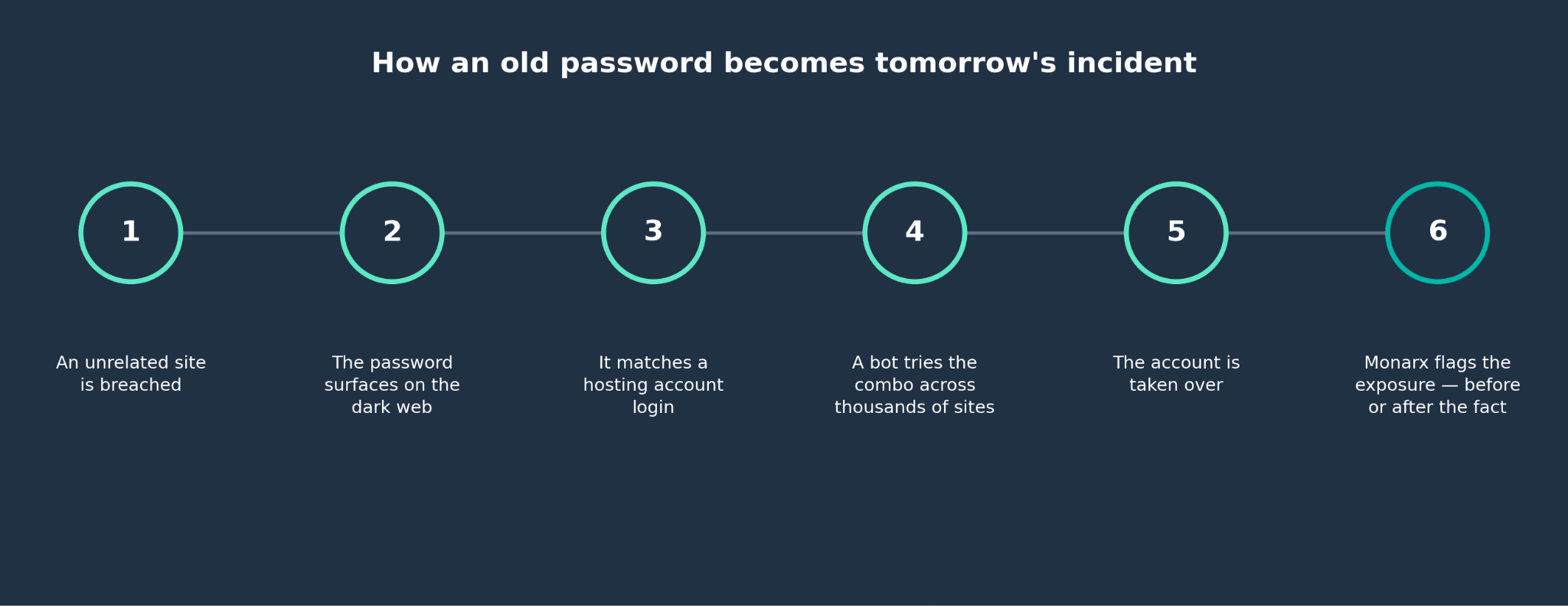
By the time a site is defaced, spam-injected, or added to a botnet, the actual security failure happened long before and far away from the hosting environment that ends up taking the blame.
The part of the story customers don’t usually get to see
What makes this scenario frustrating for customers like Maya is that the warning sign existed well before the attack. Her old password had likely been circulating in breach data for months. The information needed to prevent the whole incident was out there — it just wasn’t in front of her.
This is exactly the gap our Dark Web Monitoring solution is built to close.
From “found out the hard way” to “found out first”
The good news is that this entire scenario is avoidable, and the fix doesn’t require customers to change their behavior or become security experts overnight. It just requires visibility.
Monarx’s Dark Web Monitoring takes a domain-first approach: give it a domain, and it correlates exposure data across more than 800 billion compromised credentials and 55 billion breached accounts, spanning intelligence back to 2014. When a customer’s email, password, or other sensitive data turns up somewhere it shouldn’t, they get an alert with a clear severity rating and specific next steps — before the exposure turns into a Maya-style morning.
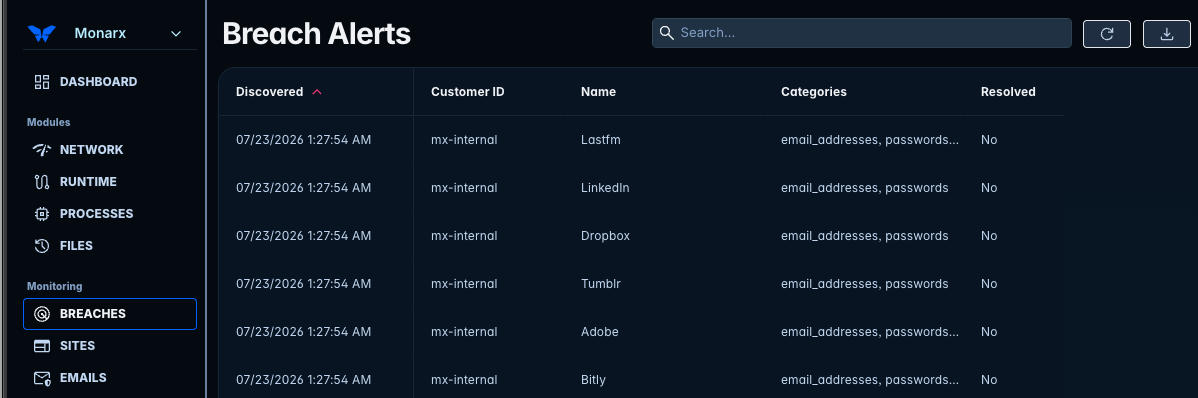
For a customer, that’s the difference between a stressful cleanup and a quiet, five-minute password change. For hosting providers, it’s a chance to be the one who caught it first — not the one who gets the angry ticket after the fact.
The takeaway
Maya's story isn't a story about a careless customer. It's a story about a password that outlived its usefulness somewhere else and quietly followed her to a place she never expected. That's true for a meaningful share of any hosting customer base right now, whether they know it or not.
The reassuring part: this is one of the few security problems where the fix is simple, proactive, and something you can offer your customers today. Dark Web Monitoring turns an invisible risk into a clear, actionable alert — and turns "we got hacked" into "we caught it first."
Sources: Bitwarden World Password Day Survey 2025 · Verizon 2025 Data Breach Investigations Report · IBM Cost of a Data Breach Report 2025 · Monarx Dark Web Monitoring

Ready for next‑gen AI Server Security?
Start your Monarx journey in minutes